Table of Contents
Imagine plugging in your laptop, tablet, smartphone, and smartwatch simultaneously – all from a single, compact brick no larger than a credit card – without a single device throttling its charge or the charger breaking a sweat. That’s not science fiction; it’s the tangible reality GaN (Gallium Nitride) technology has delivered, and by 2026, it’s become the non-negotiable standard for anyone serious about their tech ecosystem. Forget the bulky, overheating adapters of the past decade; we’re living in an era where efficient power delivery is as crucial as the devices themselves. As our reliance on multiple high-wattage gadgets grows exponentially – from ultra-thin laptops demanding 65W+ to power-hungry gaming devices – the humble wall charger has transformed from an afterthought into the critical linchpin of a seamless, productive, and clutter-free digital life.
The relentless march of technology means yesterday’s “powerful” charger is often tomorrow’s bottleneck. GaN isn’t just an incremental upgrade; it represents a fundamental shift in semiconductor materials, enabling chargers to handle significantly more power in dramatically smaller footprints while generating far less heat. This isn’t merely about convenience; it’s about safety, sustainability, and keeping pace with the energy demands of next-generation devices hitting the market right now and projected for the near future. Choosing the right GaN charger in 2026 is less about picking a gadget and more about strategically investing in the infrastructure that keeps your entire connected world energized, efficient, and ready for whatever comes next. Let’s dive deep into what truly matters when navigating the essential landscape of modern power.
Top 10 GaN Wall Chargers
Detailed Product Reviews
1. Anker Prime Charger, 100W 3-Port GaN USB C Charger Block, Foldable and Compact for MacBook, iPad, iPhone 17 Series, Galaxy S24/S23, and More

Overview:
This Anker Prime 100W GaN charger delivers robust multi-device charging in a remarkably compact form. Designed for travelers and power users, it efficiently handles laptops, tablets, and phones simultaneously with two USB-C ports and one USB-A port. Its foldable design and focus on stability address common portability frustrations.
What Makes It Stand Out:
The standout feature is the full 100W output per USB-C port, enabling ultra-fast charging for demanding devices like the 14-inch MacBook Pro (0-50% in 30 minutes). The foldable prongs, exceptional build quality preventing loose connections, and drop-proof construction elevate it beyond typical chargers. Anker’s reliable ActiveShield safety tech adds peace of mind.
Value for Money:
Priced competitively for a 100W GaN charger, it offers exceptional value. While cheaper alternatives exist, they often lack the consistent high-wattage output per port, ruggedness, or Anker’s 24-month warranty. It outperforms many single-port laptop chargers while adding multi-device versatility, justifying its cost for professionals.
Strengths and Weaknesses:
Strengths: Exceptional per-port power (100W USB-C), ultra-compact foldable design, rock-solid stability, premium build, excellent safety features, Anker reliability.
Weaknesses: No PPS support (minor for most Apple/Samsung users), USB-A port is slower (18W max), slightly pricier than budget 65W options.
Bottom Line:
A top-tier 100W charger for demanding users needing reliable, fast charging for laptops and multiple devices on the go. Its compact size, stability, and Anker’s quality make it a highly recommended investment despite a modest premium.
2. Anker Prime 67W USB C Charger, Anker GaN Wall Charger, 3-Port Compact Fast PPS Charger, For MacBook Pro/Air, Pixelbook, iPad Pro, iPhone 17/16/Pro, Galaxy S23/S22, Note20, Pixel, Apple Watch, and More

Overview:
Anker’s 67W Prime GaN charger packs significant power into an ultra-portable 3-port solution. It targets users needing to charge a laptop, tablet, and phone simultaneously without sacrificing desk or bag space, leveraging GaN efficiency for its remarkably small footprint (51% smaller than Apple’s 67W brick).
What Makes It Stand Out:
Its standout feature is PPS (Programmable Power Supply) support, crucial for optimal fast charging on Samsung Galaxy devices (like S24/S23) and newer Pixels. The 65W max two-port output ensures fast simultaneous charging, while ActiveShield 2.0 provides advanced thermal and electrical safety, a key differentiator in its class.
Value for Money:
Excellent value for Samsung/Pixel users due to PPS. While similar wattage chargers exist, the inclusion of PPS, Anker’s trusted safety tech, compactness, and 24-month warranty make it worth the slight premium over non-PPS models. Cheaper options often lack PPS or robust safety.
Strengths and Weaknesses:
Strengths: Essential PPS support for Samsung/Pixel, superb compactness, reliable 65W dual-port output, ActiveShield 2.0 safety, Anker build quality.
Weaknesses: Max 67W total (less than 100W competitors), USB-A port limited to 18W, no foldable prongs.
Bottom Line:
The ideal compact charger for Samsung Galaxy or Google Pixel users needing PPS for true fast charging alongside a laptop. Its small size, safety features, and Anker reliability make it a must-consider, especially if you own compatible Samsung devices.
3. 3 Pack 65W GaN Type C Wall Charger Block,6-Port Fast Charging Block,PD USB C Plug Adapter+QC Plug Compatible with Apple iPhone 17/17 Air/16E/16Pro Max/16Plus/16/15/14/13/12/11/XS Max,iPad Pro,AirPods

Overview:
This budget 3-pack offers a high port count (6 ports: 3x USB-C, 3x USB-A) at 65W total output, targeting households or offices needing to charge multiple devices from a single outlet. It promises fast charging for iPhones and broad compatibility but requires scrutiny of its power distribution claims.
What Makes It Stand Out:
The sheer number of ports (6) in a compact form factor is its main draw, eliminating outlet clutter. The bundle of three identical units provides significant value for multi-room setups (home, office, travel). Wide device compatibility is heavily emphasized in marketing.
Value for Money:
Exceptional per-unit value when buying the 3-pack for multi-location use. However, the 65W total output must be shared across all 6 ports, meaning individual device speeds (like the claimed 0-80% iPhone charge in 30 mins) likely only occur when charging 1-2 devices. Cheaper per charger than Anker, but power-per-port is lower.
Strengths and Weaknesses:
Strengths: Very high port count (6), excellent value in 3-pack for multiple locations, compact size, broad compatibility claims.
Weaknesses: Low max power per port (65W shared over 6 ports), questionable real-world fast charging speeds with multiple devices connected, generic brand (less reliable safety/features than Anker), no foldable prongs.
Bottom Line:
A practical solution for charging many low-to-mid power devices (phones, earbuds, watches) across multiple locations affordably. Not recommended for fast-charging laptops or demanding simultaneous high-wattage device use due to shared power limitations.
4. 128W USB C Wall Charger,GaN III 3-Port Fast Charging Station,PD QC Foldable Charger Block Portable 65W Laptop Adapter for MacBook Pro/Air,iPad Pro,Galaxy S23,Dell XPS 13,iPhone 17/16/Pro etc

Overview:
This Pxwaxpy-branded 128W GaN III charger promises high power (128W total) in a compact, foldable 3-port design (2x USB-C, 1x USB-A). It targets users needing to charge a laptop and multiple devices quickly, leveraging newer GaN III tech for efficiency and size reduction.
What Makes It Stand Out:
The claimed 128W total output (with 65W dedicated laptop charging) and GaN III technology for improved heat dissipation are key highlights. The foldable prongs enhance portability, and comprehensive multi-protection safety features are listed. Its compact size (50% smaller than “normal” chargers) is impressive for the wattage.
Value for Money:
Competitively priced for 128W output, offering potential savings over premium brands like Anker. However, the brand’s obscurity raises reliability concerns versus established names. The value hinges on whether the real-world performance matches claims, especially the multi-device charging behavior noted in the features (disconnects during protocol negotiation).
Strengths and Weaknesses:
Strengths: High total wattage (128W), GaN III efficiency/cooling, foldable design, compact size, multi-protection safety suite, good port selection.
Weaknesses: Obscure brand (potential quality/safety variance), documented protocol negotiation issues (disconnects 2-3x), lack of PPS specified, generic customer support compared to Anker.
Bottom Line:
A compelling spec sheet for the price, but the unproven brand and noted charging protocol instability make it a riskier choice than established brands like Anker for critical use. Consider only if the price is significantly lower and you accept potential quirks.
5. Amazon Basics 68W Two-Port GaN Wall Charger with 2 USB-C Ports (60W, 18W) with PD for Laptops, Tablets & Phones (iPhone 16/15/14/13/12/11/X, iPad, MacPro, Samsung, More), Non-PPS, Black

Overview:
Amazon Basics enters the GaN market with a no-frills, dual USB-C (60W + 18W) 68W charger. It prioritizes essential GaN benefits—compact size, foldable plug, safety features—at a budget price point, targeting users needing basic laptop and phone charging without premium extras.
What Makes It Stand Out:
Its standout aspect is the value proposition: delivering core GaN advantages (small size, efficiency, safety) at Amazon’s typically low price. The foldable plug enhances portability, and basic PD 3.0 support covers most Apple and many Android devices adequately, though PPS is notably absent.
Value for Money:
Excellent value for budget-conscious users needing reliable single-laptop + phone charging. It undercuts Anker significantly while providing essential GaN benefits and safety. However, the lack of PPS makes it less ideal for Samsung Galaxy users seeking fastest speeds, and build quality may feel less premium.
Strengths and Weaknesses:
Strengths: Very affordable, compact with foldable plug, GaN efficiency (less heat), essential safety protections, sufficient for Apple/iPad/MacBook users.
Weaknesses: No PPS (slower charging for Samsung), max dual-port output drops USB-C1 to 50W (limits laptop speed when charging two devices), basic build quality, limited warranty support vs. Anker.
Bottom Line:
A solid, cost-effective entry-level GaN charger for Apple ecosystem users who don’t own Samsung devices. Its compactness and safety are wins, but Samsung users should prioritize PPS-equipped models like Anker’s Prime 67W.
6. UGREEN Nexode 65W GaN USB C Wall Charger, 3-Port Compact Foldable Fast Charger Power Adapter for iPhone 17/16/15 Series, Galaxy S25/S24, Pixel 10/9, MacBook Pro/Air, Dell XPS, iPad Pro (Black)

Overview: The UGREEN Nexode 65W GaN charger is a compact, multi-device power adapter leveraging Gallium Nitride (GaN) technology for efficient, high-wattage charging across laptops, smartphones, and tablets. Its streamlined design targets travelers and professionals needing reliable on-the-go power.
What Makes It Stand Out: Its standout features include a remarkably compact size (50% smaller than legacy 60W chargers) due to GaN efficiency, a foldable plug for portability, and versatile 3-port configuration (2x USB-C, 1x USB-A). The 65W output delivers rapid MacBook Air charging (51% in 30 minutes) while maintaining cool, safe operation.
Value for Money: Priced competitively against single-port laptop chargers, it offers exceptional value by replacing multiple adapters. The ability to charge a laptop and two peripherals simultaneously justifies its cost better than buying separate chargers, especially for frequent travelers.
Strengths and Weaknesses: Strengths: Ultra-portable foldable design; robust 65W laptop charging; cool/safe GaN operation; broad device compatibility. Weaknesses: Lacks a digital power display; USB-A port limits max speed for newer devices; no included cable.
Bottom Line: An excellent travel companion for multi-device users, the Nexode 65W balances power, portability, and safety effectively. Ideal for MacBook and smartphone owners seeking a single, reliable charger without bulk.
7. Anker Laptop Charger, 140W Max 4-Port GaN USB C Charger Block with Smart Display, Fast Charging Power Adapter, Touch Controls for MacBook, iPad, iPhone 17/16 Series (Include 5FT Cable, Non-Battery)

Overview: Anker’s premium 140W GaN charger features a smart color display and four ports, designed for power users needing simultaneous high-speed charging for laptops, tablets, and phones. It combines cutting-edge safety with real-time monitoring in a compact form factor.
What Makes It Stand Out: The high-definition color display is revolutionary, showing exact wattage, temperature, and port status. Dual 140W USB-C ports enable ultra-fast MacBook charging (50% in 30 mins), while ActiveShield 4.0 safety monitors temps 10 million times daily. The included 5ft 240W cable adds immediate usability.
Value for Money: Though pricier than basic GaN chargers, the display, unmatched 140W dual-output capability, and comprehensive safety justify the cost for professionals. Replacing multiple chargers and avoiding battery degradation from overheating enhances long-term value.
Strengths and Weaknesses: Strengths: Real-time display clarity; exceptional 140W dual-port performance; industry-leading safety; includes high-wattage cable. Weaknesses: Bulkiest in this lineup (though still compact); premium price may deter casual users.
Bottom Line: A top-tier choice for tech enthusiasts and professionals prioritizing visibility, safety, and maximum power. Worth the investment if you routinely charge multiple high-drain devices like a 15" MacBook Air and peripherals together.
8. W & O Fast Charger for iPhone17/16/15,60W gan Charger,Retractable Phone Charger Wall Plug with Lightening and Type-C Cables for iPhone, Galaxy S25/24,Android and More (Pink)

Overview: This unique 60W GaN charger integrates retractable Lightning and USB-C cables into a vibrant pink wall plug, targeting iPhone users and pet owners frustrated by cable clutter and chew damage. It simplifies charging with built-in, tangle-free cords.
What Makes It Stand Out: The retractable cables (tested for 20,000+ extensions) are the hero feature, eliminating messy cords and pet-chewing risks. The built-in Lightning cable caters specifically to newer iPhones, while the additional USB-C port supports 60W fast charging for three devices total. The bright pink hue aids visibility.
Value for Money: At its price point, the convenience of integrated, durable cables offers solid value—no need to buy or replace separate cords. The pet-proof design is a niche but compelling perk, though the 60W max is modest compared to laptop-focused competitors.
Strengths and Weaknesses: Strengths: Innovative retractable cables reduce clutter; pet-chew protection; vibrant color for easy location; GaN efficiency (92% conversion). Weaknesses: Limited to 60W (insufficient for most laptops); Lightning cable restricts future-proofing; pink color may not suit all.
Bottom Line: Perfect for iPhone-centric households with pets or cable management struggles. While not for laptop users, its clever design solves specific pain points affordably and colorfully.
9. INIU for iPhone 17 Charger, 30W 2-Port Type C Charger Fast Charging, Foldable USB C Charger Block with USBC Cable for iPhone 17 16 15 Pro Max, MacBook Air 13 M4 iPad 13 11, Samsung S25 S24, Goodle etc

Overview: INIU’s 30W dual-port GaN charger focuses on ultra-compact reliability for iPhone and light-device users. It includes two chargers and cables in the box, emphasizing travel readiness with a foldable plug and industry-leading warranty.
What Makes It Stand Out: Its standout trait is the exceptional 3-year warranty (“INIU Care”), surpassing industry standards. The 30% smaller footprint than Apple’s 30W charger and foldable plug enhance portability, while GaN ensures safe, cool charging up to 71% iPhone battery in 30 minutes.
Value for Money: The 2-pack value is compelling—you get double the chargers and cables for minimal extra cost versus single units. Ideal for home/outlet use and travel, it outperforms older brick chargers at a fair price, especially with the long warranty reducing replacement anxiety.
Strengths and Weaknesses: Strengths: Outstanding 3-year warranty; ultra-compact foldable design; includes two chargers + cables; safe GaN operation. Weaknesses: 30W total shared across ports (limits laptop charging); no USB-A port; max output too low for newer MacBooks.
Bottom Line: A superb budget-friendly pick for iPhone and tablet users needing reliable, space-saving charging at home and on the move. The warranty and 2-pack seal its value for non-laptop power needs.
10. Anker Zolo USB C Charger Block, 2-Pack 4-Port Wall Adapter with 50W Max Output, 2 USB-C and 2 USB-A, Compact and Stable Design, for iPhone 17/16 Series, MacBook, iPad, Pixel, Galaxy, and More (Black)
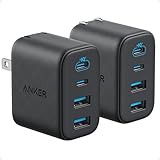
Overview: Anker’s Zolo 50W 4-port charger 2-pack delivers balanced multi-device charging in an AirPods-sized form. Designed for households or travelers needing to power phones, tablets, and earbuds simultaneously from limited outlets.
What Makes It Stand Out: The dual 2-pack offer is unique, providing two compact chargers (each with 2x USB-C and 2x USB-A ports) for versatile coverage. Even when using multiple ports, it maintains strong output (30W + 20W on USB-C), and ActiveShield 4.0 ensures safety with 24/7 monitoring.
Value for Money: Buying two chargers at once offers exceptional value for families or frequent travelers. The consistent per-port power delivery (unlike chargers that throttle significantly) makes it cost-effective versus purchasing single-port adapters separately.
Strengths and Weaknesses: Strengths: Cost-effective 2-pack bundle; reliable per-port power allocation; ultra-portable foldable design; robust safety suite. Weaknesses: 50W max limits laptop charging speed; no display for power monitoring; USB-A ports use older standards.
Bottom Line: The ideal solution for multi-device households seeking clutter-free, consistent charging across everyday gadgets. Its 2-pack value and compact safety make it a practical, no-fuss upgrade for most users.
Understanding the GaN Revolution: Why It’s Essential Now
The Fundamental Shift from Silicon to Gallium Nitride
Traditional silicon-based chargers have hit a physical ceiling. Gallium Nitride, a compound semiconductor, operates far more efficiently at higher frequencies and temperatures. This fundamental material difference allows GaN chargers to shrink components significantly while handling the same or greater power loads. The result? A drastic reduction in size and weight without sacrificing performance, making high-wattage charging truly portable.
Efficiency Gains: Cool Operation and Lower Energy Waste
GaN chargers convert AC power to DC power for your devices with remarkable efficiency, often exceeding 90%. This minimizes energy lost as heat – a major issue with older silicon chargers, especially under heavy load. Cooler operation isn’t just about comfort; it directly translates to longer component lifespan, enhanced safety margins, and reduced strain on your home’s electrical system over time. You’ll notice less warmth emanating from the charger itself, even when powering multiple demanding devices.
The Direct Impact on Size and Portability
This efficiency is the secret sauce behind the compact form factors we now expect. Where a 65W silicon charger might be bulky and cumbersome, a comparable GaN model fits easily in a pocket or laptop bag. For travelers, remote workers, and anyone managing a desk setup, this reduction in physical footprint is transformative, eliminating cable clutter and the need for multiple adapters. The era of “power brick anxiety” is effectively over thanks to GaN.
Decoding Power Needs for Your 2026 Tech Ecosystem
Assessing Total Wattage Requirements Accurately
Don’t just add up the maximum wattage your devices can draw; consider realistic simultaneous usage. A laptop might need 65W when gaming but only 30W during web browsing, while a phone draws 20W max but often less. Calculate your typical peak load: the combined wattage when all devices are charging actively at their highest common need. Underestimating leads to slow charging; overestimating wastes money on unnecessary capacity.
The Critical Role of USB Power Delivery (USB-PD) Standards
USB-PD is the universal language modern GaN chargers and devices speak. By 2026, compliance with USB-PD 3.1 (which supports up to 240W) is increasingly important for future-proofing, especially if you own or plan high-power devices like premium laptops or portable monitors. Ensure the charger explicitly supports the specific PD profiles your devices require (e.g., 20V/5A for 100W laptops). Generic “fast charging” claims are meaningless without PD specification.
Navigating Multi-Port Power Distribution Dynamics
Crucially, the total wattage isn’t equally available on every port simultaneously. Chargers employ intelligent power allocation. Understand the charger’s specific power-sharing profile: Does it deliver full wattage on one port only when others are in use? How does it prioritize ports? A 100W charger might offer 65W + 30W, but not 65W on two ports at once. Match this profile to your most common multi-device charging scenarios to avoid bottlenecks.
Safety, Reliability, and Long-Term Value Considerations
Non-Negotiable Safety Certifications and Protections
Never compromise on safety. Look for mandatory regional certifications like UL (US), CE (Europe), CCC (China), or PSE (Japan) clearly marked. Beyond basics, robust chargers include multiple layers of protection: Over-Voltage Protection (OVP), Over-Current Protection (OCP), Over-Temperature Protection (OTP), Short-Circuit Protection (SCP), and sometimes even Over-Power Protection (OPP). These circuits are vital for preventing damage to your expensive devices and your home.
Build Quality: Materials, Heat Dissipation, and Durability
Feel the weight (a quality GaN charger has substance due to internal components) and examine the casing. High-quality, flame-retardant plastics or even aluminum housings are common in premium models and significantly aid heat dissipation. Check for smooth, sturdy plug mechanisms (if foldable) and robust cable ports. Poor build quality leads to premature failure, especially under sustained high loads, negating GaN’s inherent advantages.
Warranty, Reputation, and the True Cost of Ownership
A strong warranty (typically 18-36 months) signals manufacturer confidence. Research the brand’s reputation for customer service and reliability – forums and professional reviews are invaluable here. While a slightly higher upfront cost might sting, a durable, safe GaN charger that lasts 5+ years offers vastly better value than replacing multiple cheaper, less reliable units. Consider it an investment in your tech infrastructure.
Design and Practical Integration for Modern Setups
Form Factor: Wall Plug vs. Desktop Brick vs. Modular Systems
Your physical space dictates the ideal design. Wall plugs (where the prongs fold directly into the charger body) maximize outlet space but can block adjacent sockets. Desktop bricks (with a separate cable) offer more placement flexibility but require cable management. Emerging modular systems let you swap plug types (US/EU/UK) or add extra ports, ideal for frequent travelers. Choose based on your primary charging location – desk, travel kit, or bedside stand.
Cable Management and Port Layout Strategies
Thoughtful port placement matters. Are ports spaced widely enough to accommodate bulky USB-C cables without straining connectors? Are they positioned to minimize cable tangling? Some chargers feature angled ports or clever recesses. Built-in cable wraps or storage are rare but highly useful for travel. Consider how the charger will sit on your desk or nightstand and whether cables will drape neatly or create a messy snarl.
Integration with Smart Home and Power Strips
Many modern power strips now incorporate GaN charging hubs. If you’re building a clean desk setup, look for strips with dedicated, high-wattage GaN ports alongside standard outlets. Ensure compatibility – the strip’s integrated GaN module must meet your power needs. Some smart plugs also offer USB-C GaN charging, adding scheduling or remote control, though wattage is usually limited to 30-45W for single-port models.
Future-Proofing Your Power Investment for 2026 and Beyond
Embracing USB-PD 3.1 and Extended Power Range (EPR)
USB-PD 3.1’s Extended Power Range (EPR), enabling up to 240W (48V/5A), is the new frontier. While most current laptops top out around 100-140W, high-performance notebooks, workstations, and potentially future monitors or peripherals will leverage EPR. If you anticipate upgrading to such devices within the next 2-3 years, investing in a PD 3.1/EPR compatible charger now ensures seamless compatibility without needing another replacement.
Compatibility with Emerging Device Categories
Keep an eye on power demands from emerging tech. Ultra-high-resolution portable monitors, powerful handheld gaming consoles, next-gen VR/AR headsets, and even some premium tablets are pushing power requirements higher. A charger with sufficient headroom (e.g., 100W+ instead of settling for 65W) provides flexibility for these newer, hungrier devices that might not have existed when you bought your last charger.
Sustainability and Eco-Design Considerations
GaN’s inherent efficiency is a sustainability win, but look deeper. Does the manufacturer use recycled materials in the housing? Is the packaging minimal and recyclable? Some brands now offer take-back programs. Reduced energy waste during charging and longer product lifespans significantly lower the environmental footprint compared to frequent replacements of inefficient chargers. Supporting eco-conscious brands aligns with responsible tech consumption.
Frequently Asked Questions
What exactly makes GaN chargers better than the old ones I have?
GaN chargers use a superior semiconductor material that runs cooler and more efficiently than traditional silicon. This allows them to deliver the same or higher power levels in a much smaller, lighter package without overheating, making them ideal for charging multiple modern devices simultaneously.
How do I know what wattage GaN charger I actually need?
Add up the typical maximum wattage your devices draw when charging at the same time (e.g., 65W laptop + 20W phone = 85W peak). Choose a charger whose total wattage exceeds this peak by 10-20% for headroom. Don’t just add the absolute max each device can use if they won’t all hit that peak together.
Will a GaN charger work with my older devices that use USB-A ports?
Most modern GaN chargers focus solely on USB-C ports, which is the future-proof standard. You’ll need a separate USB-C to USB-A cable for older devices, but the charger itself will still supply power safely through that cable. Avoid chargers with mixed USB-C/USB-A ports if pure future-proofing is your goal.
Are higher-wattage GaN chargers (like 100W+) safe to use with my phone that only needs 20W?
Absolutely. GaN chargers and your devices communicate intelligently via USB Power Delivery (PD). The charger only supplies the exact wattage your device requests and can handle. Using a 100W charger on a 20W phone is perfectly safe and common practice.
Why does the wattage available on each port change when I plug in multiple devices?
GaN chargers have a fixed total power budget. They dynamically allocate this power based on what each connected device requests. For example, a 65W charger might give 45W to a laptop and 20W to a phone, but if you plug in a second phone, it might shift to 30W + 18W + 18W. Always check the manufacturer’s specific power-sharing profile.
Can GaN chargers really last longer than my old chargers?
Yes, primarily due to lower operating temperatures. Excessive heat is a major cause of electronic component degradation. GaN’s efficiency means less heat stress on internal parts, significantly extending the charger’s functional lifespan compared to bulkier, hotter-running silicon models.
What safety features should I absolutely not compromise on?
Ensure the charger has essential certifications (UL, CE, etc.) and core protections: Over-Voltage (OVP), Over-Current (OCP), Over-Temperature (OTP), and Short-Circuit Protection (SCP). These are non-negotiable for safeguarding your devices and home.
Are foldable plug designs worth it, or are they less durable?
Modern high-quality foldable plugs, especially from reputable brands, are very durable. They use robust hinge mechanisms designed for thousands of cycles. The space-saving and travel convenience far outweigh minor durability concerns, which are minimal in well-made units.
Will a GaN charger work effectively in countries with different electrical outlets?
The GaN charger itself (the brick) handles the AC to DC conversion. You only need a simple, inexpensive, passive plug adapter to physically fit the local wall socket (e.g., EU to US plug adapter). The charger’s internal electronics automatically handle 100-240V input common worldwide.
Is USB-PD 3.1 (240W) something I need to care about right now?
If you own a very high-end laptop (like some mobile workstations) or plan to buy one in the next 1-2 years, yes. Otherwise, USB-PD 3.0 (up to 100W) still covers the vast majority of laptops, tablets, and phones in 2026. PD 3.1 is crucial for future-proofing if you anticipate needing extreme power.
See Also
- 10 Top-Rated GaN Wall Chargers According to Tech Experts in 2026
- The 10 Ultimate Best Wall Chargers with USB C for Modern Devices in 2026
- 10 Must-Have GaN Wall Chargers for Minimalist Setups in 2026
- 10 Top-Rated Fast Wall Chargers According to Tech Experts in 2026
- 10 GaN Wall Chargers That Solve Overheating Issues in 2026