Table of Contents
Waking up to a dead phone battery is the modern equivalent of missing your morning alarm—a frustrating start that can derail your entire day. As our bedrooms transform into tech hubs where we manage everything from sleep tracking to smart home controls, the humble nightstand has evolved from a simple furniture piece to a critical charging station. The right wall charger with USB ports doesn’t just power your devices overnight; it becomes an invisible convenience that seamlessly supports your digital lifestyle while you rest.
Choosing the perfect charging solution for your bedside isn’t as straightforward as grabbing the first adapter you see at the store. Nightstand environments have unique requirements—from subtle LED indicators that won’t disrupt your sleep to compact designs that fit tight spaces between furniture and walls. Whether you’re powering a single smartphone or managing a ecosystem of wearables, tablets, and e-readers, understanding what separates an adequate charger from an exceptional one will transform your nightly routine and ensure you wake up fully powered and ready to conquer the day.
Top 10 Wall Chargers with USB Ports
Detailed Product Reviews
1. Wall Charger, Surge Protector, QINLIANF 5 Outlet Extender with 4 USB Charging Ports (4.8A Total) 3-Sided 1680J Power Strip Multi Plug Adapter Spaced for Home Travel Office (3U1C)
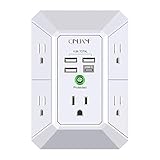
Overview: The QINLIANF outlet extender transforms a standard duplex outlet into a comprehensive charging station with five AC outlets and four USB ports (three USB-A, one USB-C). Delivering 1680 joules of surge protection, this wall-mounted adapter features a clever three-sided design that maximizes space efficiency while keeping cables organized. Its secure screw-mounting system ensures stability when plugging and unplugging devices.
What Makes It Stand Out: The 3-sided outlet configuration provides exceptional plug spacing (2.1 inches) that accommodates bulky adapters without blocking adjacent ports—a common frustration with standard power strips. The integrated USB-C port adds modern device compatibility, while the proprietary groove design allows flush wall mounting. Its three-tier surge protection circuit (TVS, MOV, and GDT) offers superior response times compared to conventional single-layer designs, safeguarding sensitive electronics from voltage spikes.
Value for Money: Priced competitively against similar surge protectors, this unit eliminates the need for separate USB chargers, potentially saving $20-30 in additional accessories. The 1680J rating matches premium alternatives, while the space-saving wall-mount design avoids the cost of furniture-damaging floor strips. ETL certification and a 12-month warranty provide additional peace of mind for the investment.
Strengths and Weaknesses: Strengths:
- Excellent plug spacing accommodates oversized adapters
- Secure wall mounting prevents accidental disconnection
- Three-level surge protection with visual indicator
- USB-C port supports modern devices
- Flushes against wall for low-profile installation
Weaknesses:
- Only compatible with standard duplex outlets (not GFCI)
- USB-C port limited to 5V/3A (no fast charging)
- Requires screwdriver for secure installation
- Cannot be used on outlets with parallel socket configurations
Bottom Line: Ideal for travelers, office workers, and dorm residents seeking a space-saving power solution. The QINLIANF extender excels in plug management and surge protection, though users with GFCI outlets or fast-charging needs should consider alternatives. For standard wall outlets, it delivers exceptional utility and protection.
2. USB Wall Charger, LUOATIP 3-Pack 2.1A 5V Dual Port Cube Power Adapter Plug Block Charging Box Brick for iPhone 14 13 12 11 Pro Max SE XS XR X 8 7 6 6S Plus, Galaxy, LG, Moto, Android Phones

Overview: The LUOATIP three-pack provides basic dual-port USB wall chargers delivering 2.1A at 5V per adapter. These compact cubes feature universal compatibility with iPhones, Samsung Galaxy devices, and most USB-powered electronics. Designed for portability, each unit offers simultaneous dual-device charging with built-in protection circuitry in a fire-resistant housing.
What Makes It Stand Out: The triple-pack configuration delivers exceptional redundancy for multi-location use—home, office, and travel bag—without requiring constant unplugging. The anti-throw design and heat-resistant construction prioritize durability, while the intelligent protection circuit automatically guards against short circuits, overheating, and overcharging. Their minimalist cube form factor fits crowded power strips and tight wall outlets where bulkier adapters fail.
Value for Money: At roughly $3-4 per adapter, this package undercuts single-unit competitors by 50% while maintaining essential safety certifications. For users needing multiple charging points rather than rapid charging, it eliminates the premium cost of fast-charging technology. The three-unit bundle effectively provides a 67% discount compared to purchasing individual adapters separately, making it one of the most economical reliable charging solutions available.
Strengths and Weaknesses: Strengths:
- Exceptional price-per-unit value in three-pack
- Compact size fits tight spaces and travel bags
- Automatic protection against common electrical faults
- Universal compatibility across device ecosystems
- Heat-resistant, fireproof construction
Weaknesses:
- 2.1A total output limits charging speed for modern devices
- No USB-C connectivity for newer electronics
- Lacks fast-charging protocols (PD or QC)
- Basic aesthetic design
- Individual units lack surge protection
Bottom Line: Perfect for budget-conscious users prioritizing quantity and reliability over speed. These chargers serve admirably as backup units, travel accessories, or dedicated chargers for overnight charging scenarios. Those requiring quick power delivery should invest in PD-capable alternatives, but for basic daily needs, this three-pack delivers undeniable value.
3. Surge Protector Outlet Extender - with Rotating Plug, 6 AC Multi Plug Outlet with 4 USB Ports (2 USB C), 1800J Wall Charger, 3-Sided Power Strip with Spaced Outlet Splitter for Home, Office, Travel

Overview: This versatile outlet extender upgrades any wall receptacle into a 10-device charging hub featuring six AC outlets and four USB ports (two USB-C, two USB-A). With 1800 joules of surge protection and a 180-degree rotating plug, the adapter accommodates horizontal and vertical outlets while maintaining a compact 5.7-inch profile. The three-sided design optimizes plug spacing for bulky power adapters.
What Makes It Stand Out: The rotating plug mechanism solves a critical pain point, allowing use in horizontally or vertically oriented outlets without sacrificing port accessibility. Two USB-C ports provide future-proofing for modern devices, while the 1800J surge protection exceeds many competitors. The grounded indicator light offers visual confirmation of active protection, and the fire-resistant ABS shell withstands temperatures up to 1382°F. Its travel-friendly size combines desktop strip functionality with wall-mount convenience.
Value for Money: Competing products with similar port counts and rotating capabilities typically command 30-40% premiums. This unit’s 1800J rating matches surge protectors costing twice as much, while the dual USB-C ports eliminate separate charger purchases. For mobile professionals and renters seeking non-permanent installation, the versatility justifies every dollar, effectively replacing a $25 power strip and two $15 USB chargers in one $30 device.
Strengths and Weaknesses: Strengths:
- 180° rotating plug adapts to any outlet orientation
- Two USB-C ports support modern device ecosystem
- Superior 1800J surge protection rating
- Compact, travel-ready dimensions
- Visual protection indicator light
- Fire-resistant high-temperature housing
Weaknesses:
- USB ports share 3.1A total output (limits simultaneous fast charging)
- No screw-mount option for secure installation
- 15A/1875W maximum may limit high-power appliances
- Indicator light cannot be dimmed for bedroom use
- USB-C ports limited to 5V (no PD fast charging)
Bottom Line: An excellent choice for travelers and apartment dwellers needing flexible, powerful protection. The rotating plug and dual USB-C ports address modern charging demands admirably. While power users might desire higher USB output or PD support, the overall versatility and robust surge protection make this a top-tier travel and office companion.
4. 5 Outlet Extender Multi Plug Wall Outlets with 4 USB Charging Ports (1 USB C Outlet), 3 Sided 1680J Surge Protector Power Strip USB Wall Charger for Home, Office, Travel, ETL Listed, White

Overview: This wall-mounted power extender converts a duplex outlet into five spaced AC outlets and four USB charging ports (three USB-A, one USB-C) with 1680 joules of surge protection. The three-sided configuration maximizes plug accessibility while maintaining a low-profile installation. ETL certification and a three-component surge protection circuit ensure device safety, and the package includes a mounting screw for secure attachment to standard wall plates.
What Makes It Stand Out: The flush-mounting groove design allows the adapter to sit nearly flat against the wall, reducing protrusion and creating a cleaner aesthetic than bulkier alternatives. The three-sided outlet arrangement provides superior plug spacing compared to linear designs, accommodating transformers and oversized plugs without crowding. Its “Protected” indicator light delivers at-a-glance surge protection status, while the intelligent USB detection automatically optimizes charging speed for connected devices, supporting everything from smartphones to power banks.
Value for Money: Positioned in the mid-range price tier, this extender eliminates the need for a separate surge protector ($15-20) and multi-port USB charger ($20-25). The 1680J protection rating matches premium standalone surge strips, while the integrated USB ports provide convenience value that justifies the modest price premium over basic outlet splitters. The included mounting hardware and 12-month warranty further enhance the investment proposition.
Strengths and Weaknesses: Strengths:
- Flush-mount design minimizes wall protrusion
- Excellent outlet spacing accommodates bulky adapters
- Visual surge protection indicator
- Automatic USB device detection and optimization
- Secure screw-mounting prevents accidental removal
- ETL certified with 12-month warranty
Weaknesses:
- Single USB-C port limits modern device connectivity
- USB-C capped at 5V/3A (no fast-charging protocols)
- Incompatible with GFCI or non-standard outlets
- Requires tools for secure installation
- White color may discolor over time
Bottom Line: A solid choice for homeowners seeking permanent, low-profile power expansion. The flush design and secure mounting make it ideal for high-traffic areas where accidental disconnection is a concern. While USB-C users may want more type-C ports, the overall build quality and thoughtful design make this a reliable everyday charging solution.
5. 2 Pack USB C Charger Block, Dual Port Type C Wall Charger Fast Charging 20W Power Adapter Cube for iPhone 14/14 Pro/14 Pro Max/14 Plus/13/12/11, XS/XR/X, iPad, Samsung, More

Overview: This two-pack delivers 20W fast-charging capability through a dual-port design (one USB-C, one USB-A) in a compact cube form factor. Supporting modern Power Delivery protocols, each adapter charges compatible devices up to three times faster than standard 5W chargers. The pack includes two identical units for multi-location deployment, targeting iPhone and iPad users seeking efficient power delivery in a portable package.
What Makes It Stand Out: The 20W Power Delivery support through the USB-C port enables rapid charging for iPhone 14/13/12 series, reaching 50% capacity in approximately 30 minutes. Despite fast-charging credentials, the adapter maintains a remarkably compact footprint that occupies minimal wall outlet real estate. The dual-port architecture preserves legacy USB-A cable compatibility while embracing modern USB-C standards. Available in multiple colors, the chargers simplify identification for different family members or usage zones.
Value for Money: Offering two PD-capable chargers for the price of one OEM Apple adapter, this package delivers exceptional cost efficiency. The 20W output matches official charger performance at 60% cost savings, while the dual-port flexibility eliminates purchasing separate adapters for different cable types. For households transitioning between USB-A and USB-C ecosystems, the combined functionality justifies the modest premium over basic chargers, effectively providing two $25 chargers for $15-18.
Strengths and Weaknesses: Strengths:
- True 20W PD fast charging for compatible devices
- Dual-port versatility (USB-C + USB-A)
- Compact, travel-friendly cube design
- Multi-color options for organization
- Intelligent safety protections built-in
- Two-unit pack enables home/office deployment
Weaknesses:
- 20W shared output when both ports active (limits simultaneous fast charging)
- USB-A port limited to standard charging speeds
- No foldable prongs for travel
- Lacks surge protection
- May run warm during extended fast-charging sessions
Bottom Line: Essential for iPhone users demanding authentic fast-charging without premium brand pricing. The dual-port flexibility and two-pack convenience make this an outstanding value for modern Apple and Samsung device owners. While power users might prefer higher wattage for iPad Pro charging, these adapters excel as primary chargers for smartphones and standard tablets. Highly recommended for fast-charging needs on a budget.
6. Aioneus USB C Charger Block, 40W Fast Charging Block Type C Charging Block 4-Port Dual Port PD+QC Wall Charger Head Cube for iPhone 17 16 15 14 13 12 11 Pro Max XS, iPad, Samsung Phone, Tablet

Overview: The Aioneus USB C Charger Block delivers 40W of power across four ports, combining two USB-C PD ports with two USB-A ports in a compact cube design. This charger addresses the modern need for simultaneous multi-device charging while supporting legacy devices. With 20W max output per USB-C port, it enables iPhone fast charging from 0-50% in 30 minutes, making it three times faster than standard 5W blocks. The unit meets stringent safety standards including ETL, UL, FCC, and RoHS certifications.
What Makes It Stand Out: The hybrid port configuration sets this apart—rarely do you find dual USB-C PD ports alongside dual USB-A ports at this price point. The intelligent power distribution automatically adjusts to each device’s requirements, while comprehensive safety protections prevent overheating, over-current, and short circuits. Its pocket-friendly size makes it ideal for travel, and the fireproof ABS + PC construction ensures durability.
Value for Money: Priced competitively for a 40W multi-port charger, it eliminates the need for four separate adapters. While premium single-port chargers cost $15-20 each, this consolidated solution offers better value, though the 20W per-port limitation means it’s not ideal for charging laptops or multiple high-power devices simultaneously. The 18-month warranty adds long-term value.
Strengths and Weaknesses: Pros: Versatile port selection, fast iPhone charging, robust safety features, space-saving design, 18-month warranty. Cons: 20W max per port limits laptop charging, no included cables, total 40W power gets divided under full load, USB-A ports don’t support QC.
Bottom Line: An excellent choice for users juggling iPhones, iPads, and older USB-A devices. It strikes a smart balance between modern fast charging and backward compatibility, though power users may need higher wattage for laptops.
7. USB Charger Cube, Wall Charger Plug, AILKIN 4.8A 4-Muti Port USB Adapter Power Plug Charging Station Box Base Replacement for iPhone 15 14 13 12 16 Pro Max/X/17, iPad Samsung Phones Charging Block
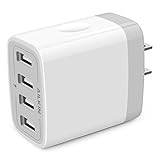
Overview: The AILKIN USB Charger Cube provides a straightforward 4-port charging solution delivering 5V/4.8A total output. This wall adapter features four USB-A ports, allowing simultaneous charging of multiple smartphones and tablets. Its universal 100-240V input makes it suitable for international travel, while the pure white minimalist design blends seamlessly with any environment. The built-in protection system guards against overcharging, over-current, and overheating, automatically stopping when batteries reach full capacity.
What Makes It Stand Out: Simplicity is this charger’s greatest asset. The clean aesthetic and straightforward functionality appeal to users who don’t need USB-C or fast charging protocols. It automatically stops charging when devices reach full capacity, maximizing battery longevity. The multipurpose white color matches any cable or décor, making it shareable among family members in various rooms.
Value for Money: As a budget-friendly multi-port charger, it offers excellent value for basic charging needs. However, its lack of USB-C and fast charging support makes it less future-proof than similarly priced alternatives. You’re essentially getting four standard 5W-equivalent ports that share 4.8A total—adequate for overnight charging but sluggish for modern devices that support 18W+ charging.
Strengths and Weaknesses: Pros: Four simultaneous ports, lightweight and compact, reliable safety features, universal voltage, affordable price point. Cons: No USB-C ports, no fast charging support, only 5V output, outdated for newer devices, limited total power.
Bottom Line: Suitable for users with older devices or basic overnight charging requirements. Most modern smartphone owners should invest in a USB-C PD charger instead, as this model’s technology lags behind current standards.
8. 6Pack USB Wall Charger, iGENJUN 2.4A Dual USB Port Cube Power Plug Adapter Fast Phone Charger Block Charging Box Brick for iPhone 17/17 Pro/17 Pro Max/16, Samsung Galaxy, Pixel, LG, Android-Colorful
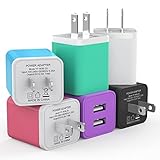
Overview: The iGENJUN 6Pack USB Wall Charger bundle provides six individual dual-port chargers, each delivering 5V/2.4A total output. Available in six colors—white, black, blue, green, purple, and red—this set allows you to assign a specific color to each family member or room. Each compact cube features two USB-A ports with intelligent chip technology that automatically matches optimal current to your device while providing protection against over-current, over-voltage, overheating, and short circuits. The 100-240V input supports worldwide travel.
What Makes It Stand Out: The color variety and quantity make this package unique. Instead of moving one charger between locations, you get six permanently placed units for home, office, or travel. This eliminates the frustration of searching for available chargers and reduces wear from constant unplugging. The six-pack configuration is perfect for families or multi-device households who prioritize availability over speed.
Value for Money: Exceptional value—six chargers for roughly the price of one premium fast charger. While each unit only provides 2.4A shared between two ports (not per port), the sheer quantity justifies the investment for basic charging needs. You’re trading high-speed charging for widespread availability throughout your space, making it economical for large families.
Strengths and Weaknesses: Pros: Six chargers for multiple locations, color customization, solid safety features, universal compatibility, space-saving design. Cons: Low power output (2.4A total), no USB-C support, slow charging for modern devices, not suitable for tablets or power-hungry devices.
Bottom Line: Ideal for families needing chargers in every room rather than speed. If you have older devices or charge overnight, this bundle offers unmatched convenience and value, though it’s underpowered for fast-charging enthusiasts.
9. Addtam Surge Protector Outlet Extender, 6-Outlet Splitter with 4 USB Wall Charger(2 USB-C Ports), Multi Plug Wall Outlet 1800J Power Strip for Home Office Dorm Room Essentials

Overview: The Addtam Surge Protector Outlet Extender transforms a standard duplex outlet into a 10-device charging station featuring six AC outlets and four USB ports (two USB-C). With 1800J surge protection using a three-level circuit design composed of TVS, MOV, and GDT components, it safeguards expensive electronics from voltage spikes more reliably than basic MOV-only protectors. The 2.2-inch spacing between AC outlets accommodates bulky power adapters without blocking adjacent ports, solving a common frustration with standard power strips.
What Makes It Stand Out: This unit’s wall-mounted design eliminates cord clutter while providing surge protection and USB charging in one device. The smart charging technology automatically detects devices and delivers optimal speed, though USB-C ports are limited to 5V/3A and don’t support Quick Charge or PD protocols. A securing screw and back prong ensure stability in the wall outlet, preventing the sagging common with heavy multi-plug adapters.
Value for Money: It replaces both a surge protector power strip and multiple USB chargers, offering excellent value despite a higher price point than basic chargers. The 1800J protection rating and 10 charging points justify the cost for home offices or entertainment centers where device concentration is high and surge protection is non-negotiable.
Strengths and Weaknesses: Pros: 10 charging points, superior surge protection, wide outlet spacing, space-saving design, USB-C inclusion, ETL certified. Cons: USB-C not QC 3.0/PD, may block second outlet, 5V USB limit, not ideal as travel adapter.
Bottom Line: Perfect for stationary setups like desks, kitchens, or media centers where surge protection and multiple charging points are essential. The USB limitations are acceptable for most smartphones but won’t satisfy fast-charging enthusiasts.
10. X-EDITION USB Wall Charger, 4-Pack 2.1A Dual Port USB Cube Power Adapter Charger Plug Charging Blocks Brick for iPhone 16e/16/15/14/13/12/11/XS/X/8/7/6 Plus, Watch Series/Ultra, Galaxy, Moto, Android

Overview: The X-EDITION USB Wall Charger comes as a 4-pack of dual-port adapters, each providing 5V/2.1A total output. These compact white cubes feature built-in smart IC chips that automatically recognize connected devices and assign optimal current. The heat-resistant, anti-throw design ensures durability, while multiple safety protections—including short circuit, over-current, over-voltage, and over-heating safeguards—provide reliable overnight charging. Each adapter can simultaneously charge two devices, making the 4-pack suitable for distributing throughout a home or office for family members.
What Makes It Stand Out: The four-pack configuration at a budget price point is the main draw. With 2.1A shared between two ports, these chargers work best for overnight charging scenarios where speed isn’t critical. The smart IC technology is impressive for such an economical product, and the 18-month warranty exceeds industry standards for budget accessories. The heat-resistant construction adds durability uncommon in this price range.
Value for Money: Extremely affordable on a per-unit basis, though the low power output reflects the price. You’re getting basic 10W charging capability that works for smartphones but struggles with tablets or modern fast-charging devices. Comparable to buying dollar-store chargers but with proper safety certifications and warranty support, making it a safer budget choice.
Strengths and Weaknesses: Pros: Four chargers for multiple locations, smart IC chip, comprehensive safety features, 18-month warranty, heat-resistant design. Cons: Low 2.1A total output, no USB-C, slow charging speeds, outdated for modern devices, not suitable for tablets.
Bottom Line: A budget-friendly solution for basic overnight charging needs across multiple rooms. While severely underpowered for fast-charging devices, the safety features and warranty make it superior to generic no-name alternatives. Modern device owners should invest in USB-C PD chargers instead.
Why Your Nightstand Demands a Specialized Charging Approach
The bedroom presents a distinct set of challenges that your kitchen counter or office desk simply doesn’t face. Light pollution from bright charging indicators can interfere with melatonin production, while bulky adapters can make your peaceful sanctuary feel cluttered and chaotic. A nightstand charger needs to balance functionality with tranquility, providing robust power delivery without becoming a distraction.
Space constraints also play a crucial role. Most nightstands sit flush against walls, leaving minimal clearance for oversized plugs. The ideal solution integrates seamlessly into this tight ecosystem, often requiring a low-profile design that doesn’t force furniture away from the wall. Additionally, the proximity to your head while sleeping means electromagnetic interference and fan noise become legitimate concerns that standard chargers ignore.
Key Features to Look for in Nightstand USB Chargers
Fast Charging Protocol Compatibility
Modern devices support various rapid charging standards, and your nightstand charger should keep pace. Look for adapters that support universal fast charging protocols like Power Delivery (PD) and Programmable Power Supply (PPS). These technologies intelligently communicate with your device to deliver optimal voltage and current, reducing charging time without risking battery health. A charger that tops off your phone during a short evening wind-down session proves far more valuable than one requiring all night to reach full capacity.
Ambient Light Management
Those piercing blue LEDs on standard chargers might look sleek in a store but become sleep-disrupting beacons in a dark bedroom. Premium nightstand chargers feature dimmed indicators or complete LED shutoff options. Some models use motion-activated displays that only illuminate when you reach for your device, maintaining darkness while providing necessary information. This thoughtful design consideration directly impacts sleep quality, making it non-negotiable for health-conscious consumers.
Port Configuration Flexibility
Your charging needs likely extend beyond a single smartphone. Consider adapters offering multiple port types—typically a mix of USB-C and USB-A—to accommodate various device generations. The most versatile options provide dedicated power channels for each port, ensuring connecting additional devices doesn’t throttle charging speed on your primary gadget. This flexibility future-proofs your setup as the industry gradually transitions to USB-C while maintaining compatibility with older accessories.
Understanding USB Charging Standards and Speeds
USB-A Versus USB-C: The Generational Divide
USB-A ports deliver reliable power but cap out at lower wattages compared to their modern counterparts. USB-C connectors support significantly higher power delivery and feature reversible designs that eliminate fumbling in the dark. For nightstand applications, prioritize chargers with at least one USB-C port rated for 20W or higher, ensuring compatibility with tablets and fast-charging smartphones. Retaining a USB-A port provides backup for legacy devices like older e-readers or fitness trackers.
Power Delivery (PD) and PPS Technology
Power Delivery represents the gold standard for modern charging, dynamically adjusting output up to 100W. For bedside use, 30-45W adapters strike the ideal balance—powerful enough for tablets and phones, yet compact and energy-efficient. PPS takes this further by making micro-adjustments every few seconds, optimizing for battery temperature and charge level. This gentle approach actually extends battery lifespan, making it perfect for overnight charging where speed takes a backseat to battery health.
Quick Charge and Proprietary Standards
While Qualcomm’s Quick Charge remains prevalent in Android devices, proprietary standards from major manufacturers create a fragmented landscape. The best nightstand chargers support multiple protocols simultaneously, automatically detecting and adapting to your device’s requirements. This universal compatibility eliminates the need for brand-specific adapters, decluttering your outlet and simplifying your charging routine.
Port Configuration Options for Different Needs
Single-Port Simplicity for Minimalists
If you charge only your phone overnight, a high-quality single-port charger eliminates complexity and reduces standby power consumption. These streamlined adapters often feature the smallest footprints, making them ideal for cramped outlet locations behind heavy furniture. Don’t assume single-port means limited power—many deliver full 30W PD output in a package barely larger than a standard plug.
Multi-Port Hubs for Device Ecosystems
For those juggling phones, smartwatches, wireless earbuds, and tablets, multi-port chargers consolidate multiple adapters into one sleek unit. The key specification here is total power allocation—ensure the advertised wattage represents simultaneous output, not a cumulative figure that requires cycling between devices. Look for intelligent power distribution that prioritizes your phone when you plug it in last-minute before bed.
Dedicated Versus Shared Power Architecture
Budget chargers often share a single power pool across all ports, meaning adding a second device halves the charging speed. Premium models feature independent power channels, maintaining full-speed charging regardless of how many ports are active. This distinction becomes critical when charging a phone and smartwatch simultaneously—shared power might leave both devices inadequately charged by morning.
Design Considerations for Bedroom Aesthetics
Form Factor and Wall Clearance
Nightstand chargers must navigate the narrow gap between furniture and wall. Flat, low-profile designs that hug the outlet prevent furniture from sitting awkwardly away from the wall. Some innovative models position ports on the bottom edge, allowing cables to drop straight down rather than protruding outward. This subtle design choice makes the difference between a seamless installation and a frustrating return.
Color and Material Finishes
Standard white or black plastic clashes with carefully curated bedroom décor. Premium options offer matte finishes, metallic accents, or even fabric-wrapped designs that complement modern bedroom furniture. Some manufacturers produce adapters in multiple colorways, allowing you to match your charger to wall plates or nightstand hardware for a cohesive look that disappears into your room’s design language.
Cable Exit Direction and Strain Relief
The direction cables exit the charger affects both aesthetics and durability. Side-exiting designs work well for outlets located beside the nightstand, while downward-facing ports suit outlets positioned directly behind furniture. Robust strain relief prevents cable damage from repeated bending, a common failure point in bedroom environments where cables get tugged during groggy morning routines.
Safety Features That Matter in the Bedroom
Overcharge Protection and Battery Health Monitoring
Leaving devices plugged in overnight traditionally risked trickle charging that degraded battery capacity over time. Modern chargers combat this with intelligent cutoff circuits that stop power delivery once devices reach full charge, then resume topping off as needed. Some advanced models even schedule charging to complete just before your alarm, keeping batteries at optimal levels without unnecessary heat generation.
Temperature Regulation and Fire Safety
Bedrooms contain flammable materials like bedding and curtains, making thermal management critical. Quality chargers incorporate multiple temperature sensors that throttle power output if components exceed safe thresholds. Look for UL certification or equivalent safety standards—these marks indicate rigorous testing for fire hazards, a non-negotiable feature for overnight, unsupervised operation.
Surge Protection Integration
Electrical storms and grid fluctuations pose real risks to connected devices. Built-in surge protection diverts excess voltage away from your expensive electronics, with joule ratings indicating protective capacity. For nightstand use, 1000+ joules provides adequate defense, though dedicated surge protectors offer even greater security for high-end devices. Some chargers combine both functions, saving outlet space while providing peace of mind.
Installation and Placement Strategies
Outlet Location Optimization
The ideal outlet sits at nightstand height, minimizing visible cable runs. If your bedroom layout doesn’t accommodate this, consider rotating the charger orientation to direct cables behind furniture. For outlets located under windows or in awkward corners, angled plug designs redirect cables along walls rather than across your sleeping area, reducing tripping hazards and visual clutter.
Handling Limited Outlet Availability
Older homes often feature just one or two outlets per bedroom, already occupied by lamps and alarm clocks. Pass-through outlet designs solve this elegantly, providing USB ports while preserving the original AC outlet for other devices. Alternatively, slimline surge protectors add multiple USB ports without monopolizing wall space, though they sacrifice the streamlined look of dedicated chargers.
Hardwired Versus Plug-In Solutions
For permanent nightstand setups, hardwired USB outlets replace standard duplex receptacles, offering the cleanest aesthetic. This approach requires basic electrical knowledge or professional installation but eliminates adapter bulk entirely. Plug-in solutions provide flexibility for renters or those who rearrange furniture frequently, making them the more versatile choice for most users.
Power Output Requirements for Modern Devices
Smartphone Charging Wattage Realities
Despite marketing claims of 100W+ charging, most phones charge at 18-30W maximum. A 30W USB-C port handles any current smartphone at full speed, with headroom for future devices. Investing in higher wattage primarily benefits tablet users or those planning to charge laptops bedside—a legitimate consideration as remote work blurs home and office boundaries.
Tablet and E-Reader Considerations
iPads and Android tablets typically require 30-45W for optimal charging speeds, while Kindle devices sip power at 5-10W. A versatile nightstand charger should deliver at least 45W on one port to accommodate occasional tablet charging without requiring a separate adapter. This future-proofs your investment as device power requirements inevitably increase.
Wearable and Accessory Power Needs
Smartwatches and wireless earbuds use proprietary charging pucks that connect via USB-A, drawing minimal power. Ensure your charger provides at least one low-power port for these accessories, as high-wattage ports can sometimes fail to recognize these tiny loads. Some advanced chargers include dedicated 5W ports optimized for wearables, preventing the slow charging issues that plague standard adapters.
Cable Management Solutions for Clean Nightstands
Built-In Cable Organization Features
Premium chargers now incorporate cable management directly into their design—magnetic cable holders, integrated clips, or weighted bases that prevent slippage. These features keep charging cords from tumbling behind furniture when unplugged, a daily annoyance that standard chargers ignore. Look for models with silicone cable grips that hold connectors at the ready for middle-of-the-night device connections.
Optimal Cable Lengths for Bedside Use
Three-foot cables typically provide the perfect reach from wall outlet to nightstand surface without excess slack. Longer cables create tangled nests that attract dust and clutter your sleeping space. Some manufacturers offer adjustable-length cables that retract into the charger body, maintaining a pristine nightstand appearance while providing flexibility for different furniture arrangements.
Wireless Charging Integration
While technically not USB ports, many modern nightstand chargers combine wireless charging pads with traditional ports. This hybrid approach eliminates cables entirely for compatible phones, reducing visual clutter. Ensure any wireless component supports your device’s specific standard—Qi certification guarantees universal compatibility, but wattage varies significantly between iPhone and Android implementations.
Smart Features and Connectivity Options
App Control and Scheduling Capabilities
Smart chargers connect to your home Wi-Fi, allowing remote monitoring and control through smartphone apps. Schedule charging to align with off-peak electricity rates or delay top-offs until just before your morning alarm. Some models integrate with smart home ecosystems, enabling voice commands to pause charging or check device status without leaving bed.
Energy Monitoring and Usage Insights
Detailed power consumption data helps identify energy-hogging devices and optimize charging habits. These insights prove particularly valuable for tracking battery degradation over time, alerting you when your phone’s battery health drops below optimal levels. While not essential for everyone, data enthusiasts appreciate the granular control and long-term cost savings.
Firmware Update Support
USB charging standards evolve rapidly, and firmware-updatable chargers adapt to new protocols without requiring hardware replacement. This feature extends the useful life of your investment, ensuring compatibility with next-generation devices. Check manufacturer support policies—some brands provide updates for years, while others abandon products within months of release.
Budget Considerations and Value Factors
Price Versus Performance Tradeoffs
Budget chargers under $15 often lack independent power channels, safety certifications, or intelligent features. Mid-range options ($20-40) typically offer the best balance—reliable fast charging, robust safety features, and thoughtful design. Premium chargers ($50+) justify their cost through smart features, superior build quality, and extended warranties, appealing to tech enthusiasts and those charging expensive devices.
Warranty and Longevity Expectations
A quality nightstand charger should last 5-7 years with daily use. Manufacturers offering 2+ year warranties demonstrate confidence in their products’ durability. Read warranty terms carefully—some cover only manufacturing defects, while others include performance degradation protection. This matters more for bedroom chargers that operate unsupervised for extended periods.
Total Cost of Ownership Analysis
Factor in potential device damage from poor-quality chargers when evaluating prices. A $10 savings upfront means nothing if a voltage spike destroys your $1000 smartphone. Additionally, energy-efficient models reduce standby power consumption, saving $5-10 annually in electricity costs. Over the charger’s lifespan, these savings often offset the initial price difference between budget and premium options.
Common Mistakes to Avoid When Choosing
Ignoring Certification Marks
UL, ETL, and CE marks aren’t mere stickers—they represent extensive safety testing. Uncertified chargers cut corners on insulation, grounding, and component quality, creating fire risks. This is especially critical for bedroom use where chargers operate near flammable materials for 8+ hours nightly. Always verify certification through official databases, as counterfeit marks plague online marketplaces.
Overlooking Standby Power Consumption
Chargers continuously draw small amounts of power even when idle. While individual consumption seems negligible, multiple devices across your home add up to measurable utility costs. Energy Star certified chargers reduce standby draw by 40% compared to standard models. For environmentally conscious consumers, this efficiency becomes a key differentiator that aligns with broader sustainability goals.
Mismatched Power Specifications
Using a 5W charger for a device that supports 30W fast charging wastes time and potential. Conversely, forcing high wattage through incompatible devices provides no benefit and may generate unnecessary heat. Research your primary devices’ maximum charging speeds, then select a charger that matches but doesn’t dramatically exceed those specifications for optimal efficiency and safety.
Future-Proofing Your Nightstand Charging Setup
Emerging USB Standards on the Horizon
USB-C is evolving toward 240W power delivery, enabling laptop charging through the same compact connector. While phones won’t require this capacity soon, having a charger that supports higher wattages prevents obsolescence. Additionally, the upcoming USB4 standard promises unified data and power delivery, potentially enabling single-cable solutions for all bedroom devices.
Modular and Expandable Systems
Some manufacturers now offer modular charging systems where you can add or remove ports as needs change. These platforms typically include a base unit with one or two ports, plus expansion modules for additional devices. While initially more expensive, this adaptability protects your investment as families grow or device collections expand, eliminating the need to replace entire chargers.
Integration with Furniture Design Trends
Furniture makers increasingly incorporate built-in charging solutions, from wireless pads embedded in nightstand surfaces to USB ports integrated into drawer systems. When selecting a wall charger, consider whether your next furniture purchase might include these features. Opting for a discrete, low-profile adapter preserves flexibility, while permanent installations might become redundant with your next bedroom upgrade.
Environmental and Energy Efficiency Factors
Materials and Manufacturing Impact
Sustainable chargers use recycled plastics, biodegradable packaging, and ethical manufacturing processes. While harder to verify, brands that publish sustainability reports and carbon footprint data demonstrate environmental commitment. Aluminum housings offer superior durability and recyclability compared to plastic, though at a higher price point and weight penalty.
Standby Power Draw Reduction Technologies
Advanced chargers employ relay switches that physically disconnect from mains power when devices unplug, achieving zero standby consumption. Others use ultra-low-power microcontrollers that draw mere milliwatts while monitoring for device connection. These features typically add $5-10 to the purchase price but provide both environmental benefits and peace of mind for energy-conscious users.
End-of-Life Recycling Programs
Responsible manufacturers offer take-back programs for old chargers, ensuring proper recycling of electronic components and metals. When evaluating options, check whether the company participates in e-waste initiatives or partners with recycling organizations. This consideration completes the sustainability loop, preventing your charger from contributing to landfill waste after years of faithful service.
Troubleshooting Common Charging Issues
Slow Charging Despite Fast-Charge Claims
This typically stems from using incompatible cables—many USB-C cables only support 60W despite the charger’s higher capacity. Additionally, some phones disable fast charging when the screen is on or when battery temperature exceeds thresholds. Verify cable specifications match your charger’s capabilities, and check device settings to ensure fast charging remains enabled during overnight sessions.
Intermittent Connection Problems
Loose outlets or heavy cables can cause chargers to partially disconnect, interrupting power delivery. Wall warts with stabilizing posts or screw-mount options secure the adapter firmly against the outlet, preventing this frustration. If problems persist, the outlet itself may need replacement, as worn receptacles lose their grip over decades of use—a common issue in older homes.
Electromagnetic Interference with Sleep Trackers
Poorly shielded chargers can emit electromagnetic fields that disrupt sensitive sleep tracking devices worn on your wrist or placed under your pillow. If your sleep data shows anomalies that correlate with charging nights, try relocating the charger further from your bed or upgrading to a model with better EMI shielding. Premium chargers undergo FCC testing to minimize interference, a specification worth verifying for data-driven sleep optimizers.
Frequently Asked Questions
What wattage should I look for in a nightstand USB charger?
For most users, a 30-45W USB-C port handles smartphones and tablets efficiently. If you only charge phones, 20W suffices, while those charging laptops should consider 60W+ options. The key is matching the charger’s output to your device’s maximum input for optimal speed without wasted capacity.
Are bright LED indicators really a sleep disruption concern?
Yes, research confirms that blue and white light wavelengths suppress melatonin production. Even small LEDs can impact sleep quality, especially for light-sensitive individuals. Prioritize chargers with dimmable or motion-activated indicators, or simply cover stubborn LEDs with electrical tape as a last resort.
Can I use any USB-C cable with my fast charger?
No. Cables have different power ratings—some max out at 15W while others handle 100W+. For reliable fast charging, use cables certified for your required wattage. Reputable manufacturers print power ratings directly on cable jackets, making verification straightforward.
Is it safe to leave devices charging overnight?
Modern chargers with overcharge protection make overnight charging safe for device batteries. However, charging on flammable surfaces like bedding poses fire risks. Always place devices on hard, non-combustible surfaces while charging unsupervised, regardless of charger safety features.
How do I know if a charger is truly certified?
Verify UL, ETL, or CE marks through official online databases. Reputable brands list certification numbers on packaging or product pages. Be wary of generic online listings showing certification marks without verifiable numbers—counterfeit certifications are rampant in budget electronics.
Will a higher wattage charger damage my phone?
No. Devices only draw the power they can handle, regardless of the charger’s maximum output. A 100W charger safely charges a 20W phone at full speed. The risk lies in using under-specified chargers that overheat when pushed beyond their limits.
What’s the difference between Power Delivery and Quick Charge?
Power Delivery is an open standard used by Apple, Google, and most Android manufacturers, while Quick Charge is Qualcomm’s proprietary technology primarily for Snapdragon-powered devices. Premium chargers support both, automatically detecting and switching protocols based on the connected device.
Should I choose a charger with a built-in cable?
Built-in cables reduce clutter and ensure optimal performance but limit flexibility if the cable fails or you upgrade to a device with different port requirements. Removable cables offer greater versatility and easier replacement, making them the more practical long-term choice for most users.
How can I reduce cable clutter on my nightstand?
Use cable clips or adhesive organizers to route cords along furniture edges. Choose chargers with bottom-facing ports to direct cables downward. Consider wireless charging pads for compatible devices, eliminating cables entirely. The goal is creating a clear surface that promotes relaxation rather than visual stress.
Do smart chargers with Wi-Fi consume more power?
The Wi-Fi module adds minimal standby consumption—typically under 0.5W. This negligible increase is offset by intelligent charging schedules that optimize energy use. For most users, the convenience and insights far outweigh the fractional energy cost, though privacy-conscious consumers may prefer simpler offline models.
See Also
- 10 Wall Chargers with USB Ports That Solve Nightstand Clutter in 2026
- How to Solve Outlet Overload with the 10 Best Wall Chargers with USB Ports in 2026
- The 10 Best USB Wall Chargers for Nightstands in 2026
- The 10 Best Wall Chargers with USB Ports for Travelers in 2026
- 10 Best Dual USB Wall Chargers for Shared Nightstands in 2026