Table of Contents
Ever tried capturing the intricate architecture of a snowflake or the iridescent scales on a butterfly’s wing with your smartphone? That magical realm of extreme close-up photography—where ordinary subjects transform into otherworldly landscapes—is within reach, thanks to macro lenses designed specifically for mobile devices. But navigating the sea of options can feel overwhelming. You’ve likely seen dazzling results online and wondered, “How do they get such stunning detail from a phone?” The truth is, achieving pro-level macro shots isn’t just about slapping any lens on your camera; it’s about understanding the subtle interplay of optics, technique, and your device’s capabilities. This isn’t a quick fix—it’s a gateway to seeing the everyday world with entirely new eyes.
Forget the hype surrounding “must-have” gadgets. The real power lies in knowing what makes a macro lens actually work well for the extreme close-ups you envision. Many lenses promise incredible magnification but deliver blurry, distorted images because they ignore fundamental optical principles. Others might fit your phone perfectly but lack the working distance needed to avoid casting shadows on your tiny subject. Choosing the right tool requires looking beyond marketing buzzwords and focusing on the tangible features that impact your final image quality and shooting experience. Let’s unpack the science and strategy behind selecting a macro lens that unlocks true microscopic detail without frustration.
Top 10 Macro Phone Lenses
Detailed Product Reviews
1. Xenvo Pro Lens Kit for iPhone and Android, Macro and Wide Angle Lens with LED Light and Travel Case Black
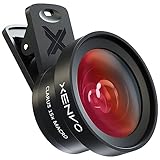
Overview: This comprehensive smartphone lens kit includes a 0.45x wide-angle lens, 15x macro lens, rechargeable LED light, lens clip, lanyard, and travel case. Designed for universal compatibility with all major smartphones, tablets, and laptops, it targets mobile photographers seeking professional-grade attachments for diverse shooting scenarios, from landscapes to macro details.
What Makes It Stand Out: The TruView wide-angle lens eliminates vignetting while capturing 45% more scene, and the Clarus macro delivers razor-sharp close-ups. The GlowClip LED light—featuring three brightness settings—outperforms smartphone flashes with natural, adjustable illumination. Aircraft-grade aluminum construction and multi-coated optics minimize artifacts, while the quick-release lanyard ensures rapid access during travel.
Value for Money: Priced competitively for its premium build and extensive bundle, it surpasses basic kits lacking lighting solutions. The inclusion of a durable travel case and rechargeable LED (absent in most rivals) justifies the cost for serious hobbyists, though casual users might find simpler kits sufficient.
Strengths and Weaknesses:
Pros: Exceptional optical clarity; versatile LED light; robust metal build; comprehensive accessories; no vignetting.
Cons: Macro lens requires precise 0.5-inch positioning; clip may struggle with bulky phone cases; higher price than entry-level kits.
Bottom Line: An outstanding all-in-one solution for mobile photographers prioritizing quality and versatility. The LED light and professional optics make it a top-tier investment for travel, macro, and low-light shooting, earning a strong recommendation despite minor usability quirks.
2. KEYWING Phone Camera Lens 3 in 1 Phone Lens Kit, 198 Fisheye Lens + 120 Super Wide-Angle Lens + 20x Macro Lens for iPhone Samsung Android Smartphone Black 3in1
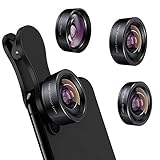
Overview: This budget-friendly 3-in-1 kit offers fisheye, wide-angle, and macro lenses with a universal clip. Tailored for casual creators, it expands smartphone photography capabilities for creative effects, wide landscapes, and close-up details, compatible with most phones but requiring case removal for optimal use.
What Makes It Stand Out: The 198° fisheye lens creates dramatic distortion for artistic shots, while the 120° wide-angle expands views by 10%. Lanthanide optical glass reduces reflections, and the aluminum housing ensures durability. The soft-rubber clip prevents scratches and grips firmly via strong springs, enabling quick swaps between lenses.
Value for Money: An affordable entry point into multi-lens kits, ideal for experimenting without significant investment. While optical quality lags behind premium kits, the fisheye’s uniqueness and solid build offer decent value for social media enthusiasts, though the case-compatibility limitation affects convenience.
Strengths and Weaknesses:
Pros: Unique fisheye perspective; lightweight and portable; easy clip-on design; good macro clarity at 1.18–3.54-inch range.
Cons: Must remove phone cases; wide-angle lacks anti-vignetting coatings; macro focus is finicky; no lighting accessories.
Bottom Line: A fun, accessible kit for beginners exploring creative angles. The fisheye lens is a standout, but optical limitations and case incompatibility make it less suitable for professionals. Recommended for casual users seeking playful effects on a budget.
3. KINGMAS 3 in 1 Universal Fish Eye Lens, Macro Clip Lens Wide-Angle Camera Lens Kit for iPad iPhone Samsung Android and Most Smartphones (Red)
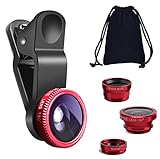
Overview: This compact red-hued kit combines fisheye, macro, and wide-angle lenses in a clip-on system. Notably, the macro and wide-angle lenses arrive pre-attached, targeting users who prioritize portability and simplicity for travel or everyday smartphone photography across most devices.
What Makes It Stand Out: The fisheye lens delivers a distinctive hemispherical view, while the attached macro/wide-angle combo simplifies switching—no separate lens swaps needed. Aircraft-grade aluminum construction enhances durability, and the clip’s universal design fits most single-camera smartphones and tablets with lenses under 13mm diameter.
Value for Money: Extremely affordable for a triple-lens set, though the unconventional macro/wide-angle pairing limits flexibility. Best for budget-focused users wanting fisheye effects without premium pricing, but the fixed lens configuration reduces versatility compared to modular kits.
Strengths and Weaknesses:
Pros: Unique fisheye distortion; durable aluminum build; ultra-portable; easy clip-on mechanism; vibrant red aesthetic.
Cons: Macro/wide-angle must be used together (no standalone wide); narrow compatibility with multi-camera phones; macro requires 1–2cm proximity; no accessories like cases or lights.
Bottom Line: A niche pick for fisheye enthusiasts valuing compactness and color. The forced lens pairing hinders adaptability, making it less practical than modular alternatives. Recommended only for casual users seeking quirky fisheye shots cheaply.
4. APEXEL Professional Macro Photography Lens for Smartphone, Macro Lenses for iPhone, Samsung, Galaxy, Oneplus, Android Phone(Fits for Almost All Phone), Cell Phone Lens Attachment for iPhone

Overview: A dedicated 10x macro lens kit focused solely on extreme close-ups, compatible with nearly all smartphones. It includes a silicone-footed clip, storage bag, and cleaning cloth, targeting users needing high-detail shots of small subjects like insects, jewelry, or textures without app dependencies.
What Makes It Stand Out: Five glass elements with multi-layer coatings deliver distortion-free, vignette-free clarity—uncommon in budget macro lenses. The large 1.57-inch aperture creates natural bokeh, while the soft silicone clip avoids scratches and fits phones with cases. The 4–7cm optimal working distance simplifies precise focusing.
Value for Money: Exceptional for macro-specific use, outperforming cheaper resin lenses with superior glass optics. At mid-range pricing, it’s a steal for detail-oriented photographers, though the lack of wide/fisheye options limits versatility versus multi-lens kits.
Strengths and Weaknesses:
Pros: Outstanding optical clarity; case-compatible clip; large aperture for artistic bokeh; universal phone fit; no apps required.
Cons: Macro-only (no wide/fisheye); no included lighting; fragile glass requires careful handling; limited working distance.
Bottom Line: The best-in-class macro lens for smartphone enthusiasts. Its optical precision and ease of use justify the price for close-up specialists, though multi-lens seekers should look elsewhere. Highly recommended for macro photography purists.
5. APEXEL 10-20X Macro Lens for iPhone & Android Phones | HD Photography Lens Kit with Universal Clip & 45-Mode Fill Light | Capture Still Life Close-Ups, Insects, Plants, Jewelry, Food & Small Objects

Overview: This premium macro kit features a 10–20x zoom lens, 45-mode LED light, and aerospace-grade aluminum body. Engineered for professionals, it excels in capturing intricate details of small subjects like jewelry or insects, with advanced lighting and optical specs rivaling dedicated cameras.
What Makes It Stand Out: The telescopic 10–20x zoom offers DSLR-like precision, while the F1.05 aperture enables stunning bokeh and low-light performance. The ultra-thin LED light provides 45 customizable color/brightness modes (2700K–6500K), and 98% light transmittance ensures minimal distortion. Aerospace aluminum ensures durability without bulk.
Value for Money: Priced higher than competitors, but justified by the zoom range, professional lighting, and optical excellence. Outperforms single-focus macro kits for serious creators, though overkill for casual users. The rechargeable light and portability add significant utility.
Strengths and Weaknesses:
Pros: Smooth 10–20x zoom; versatile 45-mode LED; exceptional low-light capability; ultra-portable light; edge-to-edge clarity.
Cons: Premium price; narrow focus range (0.6-inch); light battery lasts 2–7.5 hours; excludes iPhone mini.
Bottom Line: A powerhouse for macro photography demanding pro results. The zoom precision and lighting flexibility make it indispensable for professionals, easily warranting its cost. Top recommendation for enthusiasts prioritizing detail and creative control.
6. Phone Camera Lens,Upgraded 3 in 1 Phone Lens kit-198° Fisheye Lens + Macro Lens + 120° Wide Angle Lens,Clip on Cell Phone Lens Kit Compatible with Samsung Android Smartphones

Overview:
This aluminum-bodied 3-in-1 clip-on lens kit targets Android users seeking enhanced smartphone photography. It includes a 198° fisheye, 120° wide-angle, and macro lens (3-9cm focusing range), designed for clarity with premium optics. Critical compatibility notes exclude phones with built-in ultra-wide cameras like recent Samsung Ultras.
What Makes It Stand Out:
Industrial-grade aluminum construction ensures durability, while independent lens operation (no stacking needed) enables swift transitions between wide landscapes and macro details. The 198° fisheye delivers uniquely circular creative shots, and anti-slip rubber pads prevent phone scratches during attachment.
Value for Money:
Priced mid-range, it justifies cost through robust build quality and versatile functionality absent in cheaper plastic alternatives. However, limited compatibility with flagship Samsung Ultras reduces value for premium Android users, narrowing its ideal audience.
Strengths and Weaknesses:
Strengths: Excellent optical clarity; easy clip-on mechanism; scratch-resistant aluminum; flexible standalone lens use.
Weaknesses: Requires phone case removal; incompatible with many high-end Samsung models; wide-angle doesn’t offer zoom; fisheye’s extreme distortion limits practical use.
Bottom Line:
A solid choice for budget-conscious Android users without ultra-wide camera setups, offering reliable versatility for creative and macro photography. Verify compatibility first to avoid frustration.
7. Phone Lens,by Ailun,3 in 1 Clip on 180 Degree Fish Eye Lens+0.65X Wide Angle+10X Macro Lens,Universal HD Camera Lens Kit for Mobile Phone,Cellphone,Smart Phone
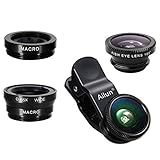
Overview:
Ailun’s universal 3-in-1 lens kit features lanthanide glass optics and an aluminum clamp for broad smartphone compatibility. It includes 180° fisheye, 0.65X wide-angle, and 10X macro lenses, targeting users seeking affordable creative expansion. Note: macro and wide-angle lenses ship stacked.
What Makes It Stand Out:
The detachable clamp fits most single-camera phones (≤13mm lens diameter), including tablets and laptops. Lanthanide glass minimizes glare, while the soft-rubber clamp prevents scratches. Unique value lies in fisheye’s hemispherical distortion and macro’s extreme close-up capability at 1-2cm distance.
Value for Money:
Exceptional affordability for a metal-constructed kit. Its universal clamp design offers broader device support than competitors, though vignetting on Android may require post-processing cropping, slightly diminishing perceived value for casual users.
Strengths and Weaknesses:
Strengths: Ultra-portable; wide device compatibility; crisp lanthanide optics; easy installation.
Weaknesses: Macro/wide-angle shipped stacked (confusing setup); Android vignetting; macro requires manual focus distance; fisheye lacks novelty of 198° alternatives.
Bottom Line:
An ideal entry-level kit for universal device support and basic creative effects. Best for travelers or beginners prioritizing portability over pixel-perfect results on Android.
8. APEXEL 100Ultra Macro Lens with CPL Starlight - Enhanced Version Smartphone Lens for iPhone, Samsung, Pixel | Pro Macro Photography of Flowers, Iinsects, Jewelry, Food Details and Other Small Objects

Overview:
APEXEL’s premium macro lens combines 10X magnification with a CPL filter and “Starlight” tech for pro-level close-ups. Engineered for flowers, insects, and jewelry, it features a 50-110mm telephoto macro range, eliminating the need to disturb delicate subjects during shooting.
What Makes It Stand Out:
The bundled CPL filter cuts reflections on water/glass, while Starlight tech transforms highlights into starbursts—ideal for jewelry photography. Lossless magnification and 50-110mm working distance set it apart, enabling detailed shots without scaring insects or obscuring subjects.
Value for Money:
High-priced but justified for serious macro enthusiasts. The CPL filter inclusion and Starlight effects add professional value missing in cheaper kits, though casual users may find it over-specified for occasional use.
Strengths and Weaknesses:
Strengths: Stunning starburst effects; reflection-free CPL; comfortable working distance; vibrant color saturation.
Weaknesses: No wide/fisheye versatility; Starlight effect niche; premium cost; requires precise lighting for optimal results.
Bottom Line:
A specialized powerhouse for macro photographers prioritizing artistic effects and reflection control. Essential for jewelry bloggers or nature documentarians, but overkill for general photography.
9. Upgraded Professional Macro Lens for Smartphone with Ring Light, HB100U Macro Photography Lens, Aluminum Phone Camera Lens Kit with Universal Clip. Phone Lens Attachment Fit for iPhone/Android Phone
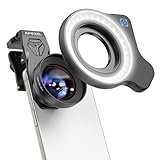
Overview:
This HB100U macro lens integrates a detachable rechargeable ring light with 45 lighting modes (2700K-6500K). Crafted from aerospace aluminum, it delivers 10X magnification via F1.05 aperture and advanced AR/AF coatings, targeting creators needing controlled illumination.
What Makes It Stand Out:
The ring light’s triple-color temperature and adjustable brightness revolutionize low-light macro work—perfect for product shots or nighttime insects. Threaded 57mm mount supports professional filters, while optical specs (99.5% transmittance, ≤0.6% distortion) ensure studio-grade clarity.
Value for Money:
Premium pricing is offset by the versatile ring light, eliminating separate light purchases. Aluminum durability and filter compatibility offer long-term value, though the niche focus may not suit casual users.
Strengths and Weaknesses:
Strengths: Game-changing ring light; exceptional optical precision; pro accessory compatibility; sleek matte finish.
Weaknesses: Bulky setup; ring light adds cost/complexity; limited to macro (no wide/fisheye); steep learning curve for lighting modes.
Bottom Line:
A must-have for e-commerce sellers or content creators needing perfect macro lighting. The ring light integration justifies the cost for professionals, but generalists should consider simpler kits.
10. 35X Macro Lens Kit for Smartphone with CPL Filter, HD Magnifier Photography Lens with Universal Lens Clip, Phone Camera Lens Attachment for iPhone 17/16/15/12/11 Samsung & Android Phone
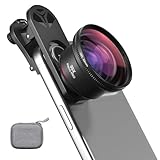
Overview:
This high-magnification kit features 35X optical power, F1.05 aperture, and a bundled CPL filter. CNC-machined aluminum housing and 5-element optics target extreme macro work (insects, fabrics) with low-light capability, compatible with most modern smartphones.
What Makes It Stand Out:
Unmatched 35X magnification reveals microscopic details, while the F1.05 aperture creates buttery bokeh even in dim settings. The included CPL filter cuts glare on reflective surfaces, and the upgraded clip avoids accidental button presses—critical for newer iPhones/Samsungs.
Value for Money:
Mid-to-high pricing reflects professional-grade specs (99.5% transmittance, ≤0.5% distortion). The 35X range and CPL inclusion offer superior value over 10X kits for serious macro hobbyists, though casual users may not leverage its full potential.
Strengths and Weaknesses:
Strengths: Extreme 35X detail; superb low-light performance; anti-glare CPL; secure clip design; versatile filter threading.
Weaknesses: Overkill for basic macro; requires disabling phone’s native macro mode on newer models; bulky for travel; steep focus precision demands.
Bottom Line:
The ultimate tool for macro enthusiasts craving microscopic detail and cinematic bokeh. Worth the investment for dedicated shooters, but beginners should start with lower-magnification kits.
Understanding Macro Photography Fundamentals
What “True” Macro Photography Really Means
True macro photography is defined by a 1:1 magnification ratio, meaning the subject is projected onto your camera sensor at its actual life-size dimensions. While smartphone macro lenses rarely achieve true 1:1 due to sensor size limitations, understanding this standard helps gauge capability. Many phone “macro modes” are simply digital zoom tricks; an external lens provides genuine optical magnification, capturing finer detail by bending light correctly before it hits the sensor, not just cropping pixels afterward.
Magnification Ratio vs. Focal Length Explained
Magnification ratio (e.g., 10x, 15x) indicates how much larger the subject appears through the lens compared to the naked eye. Higher ratios reveal finer details but drastically reduce working distance and depth of field. Focal length (often listed in millimeters, though less standardized for phone lenses) influences field of view and perspective. A shorter focal length provides a wider view around your subject at close range, while longer focal lengths offer a narrower, more compressed perspective. Don’t confuse high magnification numbers with optical quality—excessive magnification often introduces significant aberrations.
The Critical Role of Working Distance
Working distance is the space between the front of the lens and your subject when focused. This is paramount for macro photography. A very short working distance (common with high-magnification clip-ons) makes it nearly impossible to light your subject properly—you’ll block all available light with the lens itself. It also startles live subjects like insects. Prioritize lenses offering a comfortable working distance (often 1-3 inches) for practical shooting, even if it means slightly lower magnification. This space allows room for diffused lighting and reduces the risk of disturbing delicate subjects.
Key Features That Impact Image Quality
Optical Glass Quality and Coatings
Not all glass is created equal. Lenses using multi-coated optical glass significantly reduce glare, ghosting, and chromatic aberration (color fringing) compared to cheap plastic or single-coated elements. Look for mentions of “multi-element,” “HD,” or “anti-reflective coating” in descriptions—these indicate better light transmission and contrast. Poor coatings cause hazy, low-contrast images, especially in challenging lighting, robbing you of the crisp detail macro photography demands.
Aperture Size and Control
While most external phone macro lenses have a fixed aperture, its size (often implied by the lens barrel diameter) matters. A larger effective aperture gathers more light, crucial in the dim conditions common at extreme close-ups where light falloff is severe. Some advanced clip-on systems offer variable aperture control via companion apps, allowing you to adjust depth of field. A wider aperture (lower f-number) creates beautiful bokeh but reduces depth of field; a narrower aperture increases sharpness throughout the subject but requires more light. Understand this trade-off.
Minimizing Optical Aberrations
High-magnification lenses are prone to distortions. Barrel distortion (curved edges) and pincushion distortion (pinched edges) warp straight lines. Spherical aberration causes softness, especially at the edges. Chromatic aberration adds purple or green fringes. Quality lenses use multiple glass elements arranged in specific configurations to counteract these issues. Research reviews mentioning “edge-to-edge sharpness” or “minimal fringing”—these signal better aberration control essential for professional-looking results.
Practical Considerations for Real-World Use
Compatibility and Mounting Systems
Your lens is useless if it doesn’t attach securely to your specific phone model. Universal clip systems are common but can be fiddly and risk scratching your phone. Magnetic mounts offer speed but require precise alignment and may interfere with wireless charging. Permanently attached lens cases provide stability but add bulk. Measure your phone’s camera bump and check compatibility charts meticulously. A loose fit causes vignetting (dark corners) or misalignment, while a too-tight fit risks damaging your phone.
Portability and Build Durability
Macro photography often happens spontaneously—in gardens, on hikes, or during travel. A bulky, fragile lens you dread carrying defeats the purpose. Prioritize compact, lightweight designs made from aerospace-grade aluminum or robust polymers. Metal housings resist scratches and thermal expansion better than plastic. Consider how it fits in your pocket or bag alongside your phone. A lens that survives daily use is infinitely more valuable than a delicate high-performer you leave at home.
Ease of Focus and Stability
Achieving tack-sharp focus at high magnification is notoriously difficult. Even minute hand movements cause blur. Lenses with fine-focus adjustment rings (common on higher-end models) are invaluable, allowing precise manual tuning beyond your phone’s autofocus. Pair this with a stable shooting technique: brace your elbows, use a mini tripod, or rest the lens against a surface. Some lenses integrate tiny tripod threads—a small feature that makes a massive difference in sharpness, especially in lower light.
Mastering Lighting for Macro Success
Why Ambient Light Often Falls Short
As you move closer to a subject, the amount of light reaching your sensor decreases dramatically—often by several stops. Your phone’s main sensor, optimized for general use, struggles in these dim conditions, leading to noisy, grainy images. Relying solely on ambient light severely limits when and where you can shoot compelling macro. Understanding this inherent challenge is the first step toward better illumination.
Effective Use of Natural Light
When ambient light is sufficient, position yourself to use soft, diffused light. Harsh midday sun creates blown-out highlights and deep shadows that obscure detail. Early morning, late afternoon, or open shade (under a tree or awning) provides gentler, more even illumination. A simple white foam core reflector (even a piece of paper) bounced opposite your light source can fill shadows on translucent subjects like petals or insect wings, revealing subtle textures.
The Necessity of Supplemental Lighting
For consistent, high-quality results, especially indoors or in shade, dedicated macro lighting is non-negotiable. Ring lights provide even, shadow-free illumination but can look flat. Flexible LED panels offer directional control but require careful positioning. The best solution is often a small, adjustable LED macro light mounted near the lens. Look for lights with adjustable color temperature (to match ambient light) and intensity. Avoid phone flash—it’s too harsh, creates hotspots, and casts a distracting shadow from the lens itself.
Essential Techniques Beyond the Lens
Mastering Focus Stacking
Depth of field at extreme close-ups can be razor-thin—mere millimeters. Focus stacking solves this: take multiple shots, each focused on a different plane of the subject, then blend them in editing software for an image sharp from front to back. While some phone apps offer basic stacking, dedicated desktop software (like Helicon Focus or Zerene Stacker) yields superior results. Requires a stable setup (tripod essential!) and precise manual focus adjustment between shots.
Leveraging Your Phone’s Native Capabilities
Don’t ignore your phone’s built-in features. Use the volume buttons or Bluetooth shutter remote to trigger the camera without touching the screen and causing shake. Shoot in the highest-resolution mode available (often labeled “Pro” or “RAW” if supported) for maximum detail and editing flexibility. Enable grid lines to compose using the rule of thirds. Understand how your phone handles exposure—tap and hold on your subject to lock focus and exposure before shooting.
Post-Processing for Maximum Impact
Even the best macro shots benefit from subtle editing. Sharpening (use sparingly to avoid artifacts), careful noise reduction (especially in shadows), and minor contrast adjustments can make details pop. Correct white balance to ensure accurate colors—critical for subjects like flowers or minerals. Avoid heavy-handed filters; macro photography’s beauty lies in revealing authentic, intricate reality. Learn basic masking techniques to selectively enhance specific areas without affecting the entire image.
Avoiding Common Macro Photography Pitfalls
Dealing with Camera Shake and Motion Blur
At high magnification, the tiniest vibration is magnified. This is the #1 cause of soft macro images. Solutions: use a solid surface (table, rock), a mini tripod, or a dedicated phone macro rig. Enable your phone’s timer mode (2- or 10-second delay) to eliminate shake from pressing the shutter. Increase ISO only as a last resort—higher ISO introduces noise that destroys fine detail. Better to use supplemental light than crank up ISO excessively.
Managing Extremely Shallow Depth of Field
It’s easy to think only the subject’s center is in focus while edges blur. To maximize usable depth: stop down the aperture if possible (use a narrower setting), choose a slightly lower magnification ratio, position your subject parallel to the sensor plane, and consider focus stacking for critical work. Remember, depth of field isn’t just about sharpness—it’s a creative tool. Sometimes, isolating one tiny detail with extreme blur is the most powerful composition.
Overcoming Subject Movement Challenges
Live subjects (insects, leaves in breeze) move. Combat this with: faster shutter speeds (achieved via better lighting, not high ISO), shooting early in the morning when insects are less active, using a diffuser to soften wind, or focusing on stationary parts first. Patience is key—wait for the subject to pause. For fast movers, pre-focus on a spot you anticipate they’ll enter and shoot bursts.
Future-Proofing Your Macro Setup
Considering Sensor Advancements
Phone sensors are improving rapidly—larger pixels, better low-light performance, advanced computational photography. While an external lens provides optical magnification, your phone’s sensor quality ultimately captures the detail. A lens that works well today might be underutilized on next year’s phone with a superior main sensor. Prioritize optical quality in the lens itself over compatibility with fleeting phone models; a well-made glass element will perform better on future devices than a cheap lens on today’s flagship.
The Evolving Role of Computational Photography
Phones increasingly use AI and multi-frame processing for “macro” shots. While impressive for casual use, these often lack the optical fidelity and creative control of a dedicated external lens. Understand the limitations: computational zoom crops in, reducing resolution, and AI processing can create unnatural textures. For true scientific or artistic macro work, optical magnification remains superior. Choose a lens system that complements, rather than fights against, your phone’s computational strengths.
Frequently Asked Questions
What magnification ratio is actually useful for smartphone macro photography?
Aim for 8x to 15x optical magnification. Ratios significantly higher often introduce severe optical flaws and impractical working distances under 1 inch, making lighting and focus nearly impossible. Lower ratios (5x-10x) offer more usable working distance and better image quality for most subjects.
Can I use a macro lens with my phone case on?
It depends entirely on the lens mount and case thickness. Universal clip lenses often require case removal for a secure fit. Magnetic mounts usually work over thin cases but struggle with thick or rugged ones. Dedicated lens cases integrate the optics but replace your existing case. Always check compatibility with your specific case model.
Why are my macro photos blurry even when I think I’m focused?
Extreme close-ups have minuscule depth of field. Slight hand movement, subject vibration, or even air currents cause blur. Solutions: use a stable surface or tripod, enable timer mode, increase lighting (not ISO), and practice precise manual focus. Ensure the lens is clean and properly aligned over your phone’s camera.
Do I really need a separate light for macro photography?
Yes, almost always. The physics of close focusing drastically reduces light reaching the sensor. Relying on ambient light severely limits your shooting conditions and forces high ISO (noise) or slow shutter speeds (blur). A small, adjustable LED macro light is a critical investment for consistent, high-quality results.
How do I clean smudges off my tiny macro lens without scratching it?
Use a microfiber cloth designed for optics (never paper towels or clothing). Gently blow dust off first. Apply a single drop of lens cleaning fluid to the cloth, not directly on the lens. Wipe in a slow, circular motion from the center outward with minimal pressure. Store the lens in a protective case when not in use.
Is focus stacking possible with just my smartphone?
Basic focus stacking is possible using some third-party camera apps (like ProCam or Moment) that offer manual focus control and burst modes. However, results are often inferior to desktop software due to alignment challenges and limited control. For serious work, capturing the sequence on your phone and processing it on a computer yields vastly better outcomes.
Will a higher megapixel phone camera give better macro results with an external lens?
Not necessarily. Megapixels matter less than sensor size and pixel quality for macro detail. A lens projecting a sharp image onto a smaller, lower-megapixel sensor can outperform a blurry image on a high-megapixel sensor. Optical quality of the lens and stability during capture are far more impactful than raw megapixel count.
Can I achieve macro effects without buying an external lens?
Your phone’s native “macro mode” (if available) uses digital zoom and software tricks, not true optical magnification. Results lack fine detail and suffer from noise/softness, especially in lower light. While convenient for casual shots, it cannot match the optical fidelity and working distance of a dedicated external macro lens for serious close-up work.
How important is lens alignment over my phone’s camera?
Critically important. Even slight misalignment causes significant vignetting (dark corners), softness, or distorted edges. Ensure the lens sits perfectly centered over the camera sensor. Universal clips often require meticulous adjustment; magnetic mounts generally offer more consistent alignment if sized correctly for your phone model.
What’s the single most overlooked factor when starting phone macro photography?
Patience and stability. Beginners often focus solely on the lens but underestimate how much minute movements destroy sharpness at high magnification. Mastering a rock-solid shooting technique—using surfaces, tripods, timers, and controlled breathing—is more immediately impactful than upgrading gear. Slow down, stabilize, and focus deliberately.
See Also
- How to Master Macro Photography with Clip-On Phone Lenses
- 10 Expert-Recommended Phone Camera Lenses for Real Estate Photography in 2026
- 10 Essential Adjustable Focus Phone Lenses Every Photography Enthusiast Needs in 2026
- 10 Top-Rated Phone Camera Lenses According to Photography Experts in 2026
- The Ultimate Guide to Phone Camera Lenses in 2026: Boost Your Mobile Photography